FR
FR
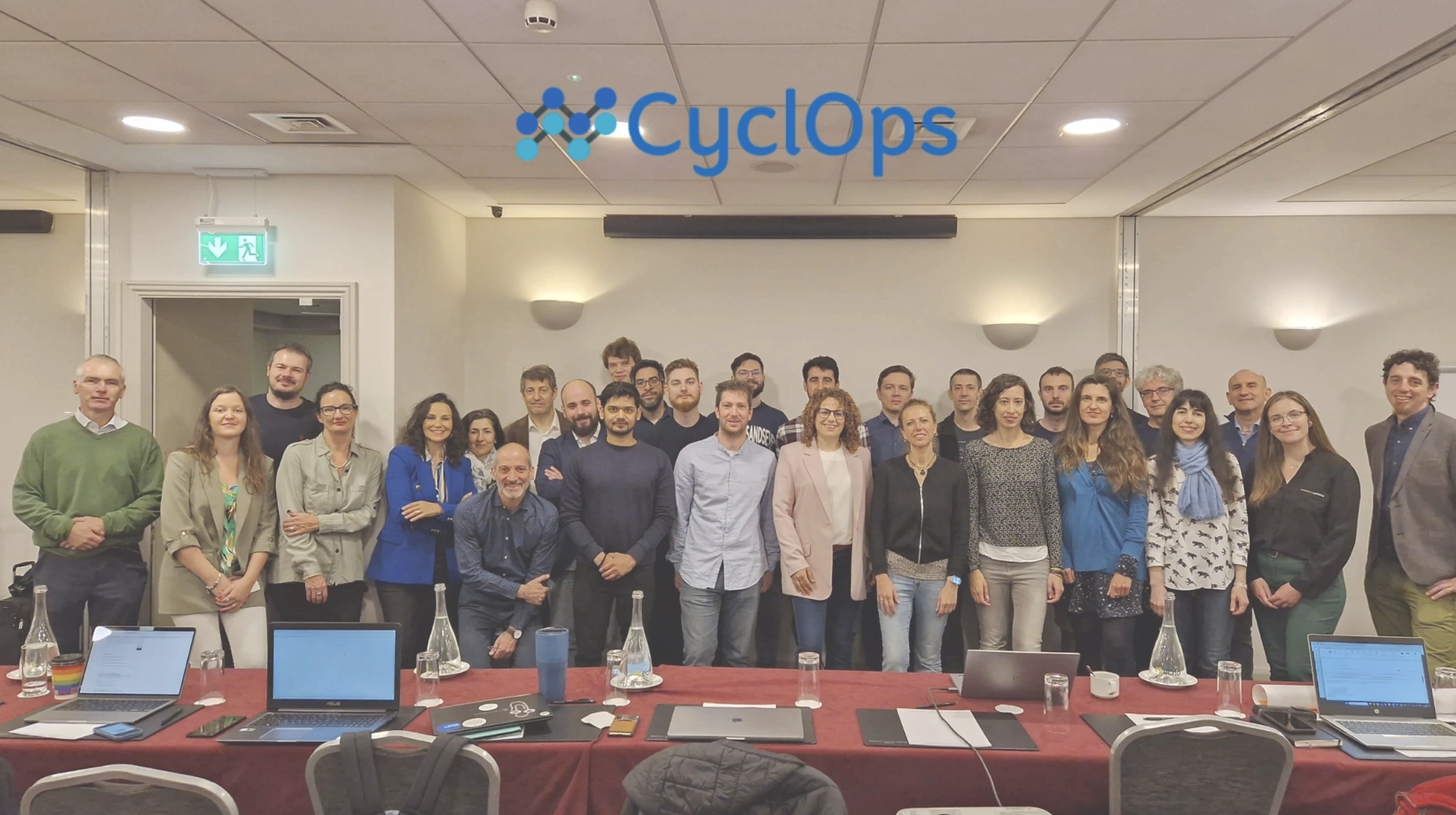
The CyclOps project, co-funded by the European Union, has been operating since January
2024 and will continue through December 2026. It is dedicated to developing a trusted,
automated, and FAIR (Findable, Accessible, Interoperable, Reusable) data lifecycle
management solution. By bringing together leading organizations from across Europe,
CyclOps aims to streamline data management across multiple sectors, including tourism,
SMEs, public procurement, Green Deals and manufacturing. The project addresses strategic
challenges, promoting digital sovereignty, sustainable innovation, and secure, trustworthy
coordination of data.
Cyclops in Figures
25 Partners
Including: EONA-X, Apidae Tourism, Ávoris Travel Group, Expert.ai S.p.A, Information Technologies Institute, University College Dublin, Fiware Foundation, Colorprint S.A.
11 Participating Countries
Spain, Italy, Greece, Germany, France, Estonia, Cyprus, Belgium, Ireland, Romania, Austria
3-Year Project Timeline (January 2024-December 2026)
4 Pilot Use Cases
• Tourism Use Case • Public Procurement Pilot • Green Deal Use Case • Manufacturing Pilot
The CyclOps Approach
CyclOps vows to pursue its missions through a comprehensive and practical approach.
The foundation of the project is a technical platform, organized into four key layers (User
Intent, Knowledge, Runtime, and Interoperability), which together allow for the automated
management of data throughout its entire lifecycle.
This setup ensures that data can move without difficulties across different systems and
domains, making it easier to integrate, process, and reuse. The project also creates a clear
governance framework, outlining the roles and responsibilities of each stakeholder.
Simultaneously, it sets up compliance mechanisms to build trust and transparency within the
companies and sectors it represents. Collaboration is fundamental, as CyclOps’s ambition is
to work with other major European data initiatives, making sure its solutions are
interoperable and contribute to a more connected and sovereign European data ecosystem.
In this new data-based economy era, we are living, CyclOps addresses the need for a
systematic and standardised mechanism to ingest, integrate, and analyse data, addressing
challenges such as considering the whole data life cycle, interoperability, and portability of
data between and across sectors, cybersecurity, privacy, and fairness aspects, and human-
related aspects, both considering social and cultural factors when needed, the ability to process human-generated and
human-related data, and integrating the human in the loop in a seamless manner.

Enabling Sustainable Tourism Through Smarter Collaboration
Tourism increasingly relies on data sharing to understand visitor behavior and manage
flows using mobility, weather, and transport data. However, this information is often
difficult to access, interpret, and use effectively.
CyclOps addresses this challenge by providing FAIR-compliant, automated software that
enables secure data sharing under trusted governance. By supporting European data
spaces, CyclOps facilitates stakeholder collaboration while promoting sustainable tourism
practices.
• France – Isère: CyclOps is developing a tool to monitor visitor flows and prevent
overcrowding in sensitive natural areas, supporting sustainable tourism.
• Spain – Mallorca: A trip-planning tool helps visitors create personalized itineraries,
enhancing the visitor experience.
Partners like EONA-X, Apidae Tourisme, and Ávoris Travel Group provide data
integration, experimentation, and AI-powered recommendations, demonstrating how
standardized and interoperable data can improve travel planning and operational
efficiency.
Turning Data into Action: The CyclOps Platform
CyclOps is more than a technical platform; it acts as the engine that prepares, integrates, and
analyzes data from multiple sources to create actionable insights. The platform consolidates
datasets and supports AI-based forecasts, making complex data understandable and usable
across sectors.
Nadia, developed by AnySolution, which leverages CyclOps datasets to help destination
management organizations (DMOs) visualize visitor flows, detect peaks, and receive
predictive insights. By combining CyclOps’ data integration, learning, and prediction
processes, Nadia enables DMOs to make real-time, informed decisions about tourism
management.
This approach demonstrates CyclOps’ core principle: turning raw data into actionable
information while maintaining FAIR compliance, secure governance, and interoperability
across systems.
CyclOps Pilot Use Cases
Outlined below are CyclOps’ four pilot use cases, showcasing cross-sector applications
and innovative approaches:
1. Tourism use case
Partners: EONA-X, Ávoris, AnySolution, Apidae, Garden Hotels
Tourism is a central use case for CyclOps, with EONA-X as a key partner.
This use case is unique, as it focuses its missions in two different countries:
- Isère (France): CyclOps is developing a monitoring tool to track tourist flows and
prevent overcrowding in sensitive natural areas, directly supporting sustainable tourism
management.
• Mallorca (Spain): The project is building a trip-planning tool to help visitors create
personalized itineraries and enhance visitor experience.
2. Public Procurement pilot
Public procurement data in Europe is highly fragmented and underused, limiting SME participation despite their economic value. CyclOps is developing tools to provide a dashboard of success factors for SMEs.
• Offer a scenario simulator to evaluate the impact of new procurement policies.
• Rank tenders by the probability of SME success.
By combining AI and semantic technologies, this use case supports policymakers and
SMEs, making public procurement more inclusive and efficient.
3. Green Deal use case
Climate change adaptation requires robust, data-driven risk assessment and monitoring.
CyclOps is enabling authorities to access and analyze complex environmental and Earth
observation data through an integrated knowledge base. A pilot in Italy’s Adige river basin
focuses on:
• Droughts
• Heatwaves
• Wildfires
This use case showcases how advanced data tools can power early warning systems and
inform effective climate action.
4. Manufacturing pilot
European manufacturers face rising costs, sustainability demands, and underuse of their
own data. CyclOps is creating a dedicated data space for the offset printing sector, enabling:
• Supply chain optimization
• Predictive maintenance via decentralized AI models
This approach supports zero-defect manufacturing, reduces waste, and helps manufacturers
align with circular economy principles, boosting competitiveness and environmental
responsibility.
Join CyclOps in advancing Europe’s data-driven future. Collaborate, leverage our solutions, and help create a secure, interoperable, and FAIR European data ecosystem.