FR
FR
Safety in Transport: Designing with Women’s Realities in Mind
Safety remains one of the most pressing challenges in public transport. In France, 91% of women report having experienced harassment or assault in transport systems, with thousands of cases officially recorded each year—most affecting women. Across Europe, however, data collection on gender-based violence in mobility remains inconsistent. Without reliable, gender-disaggregated data, policymakers cannot fully understand the scope of the problem or design effective interventions.
Women’s mobility patterns also differ significantly from men’s. Beyond commuting between home and work, women often perform “mobility of care,” making multiple stops for childcare, shopping, and family responsibilities. Yet transport networks are still largely structured around peak-hour commuting models. Gender-sensitive urban mapping initiatives demonstrate that collecting and visualizing safety and accessibility data can inform better lighting, route planning, and service frequency. Science and data must therefore serve as tools to redesign transport systems that prioritize safety, dignity, and equal access.
Women, Transport and AI: Inclusion in a Transforming Sector
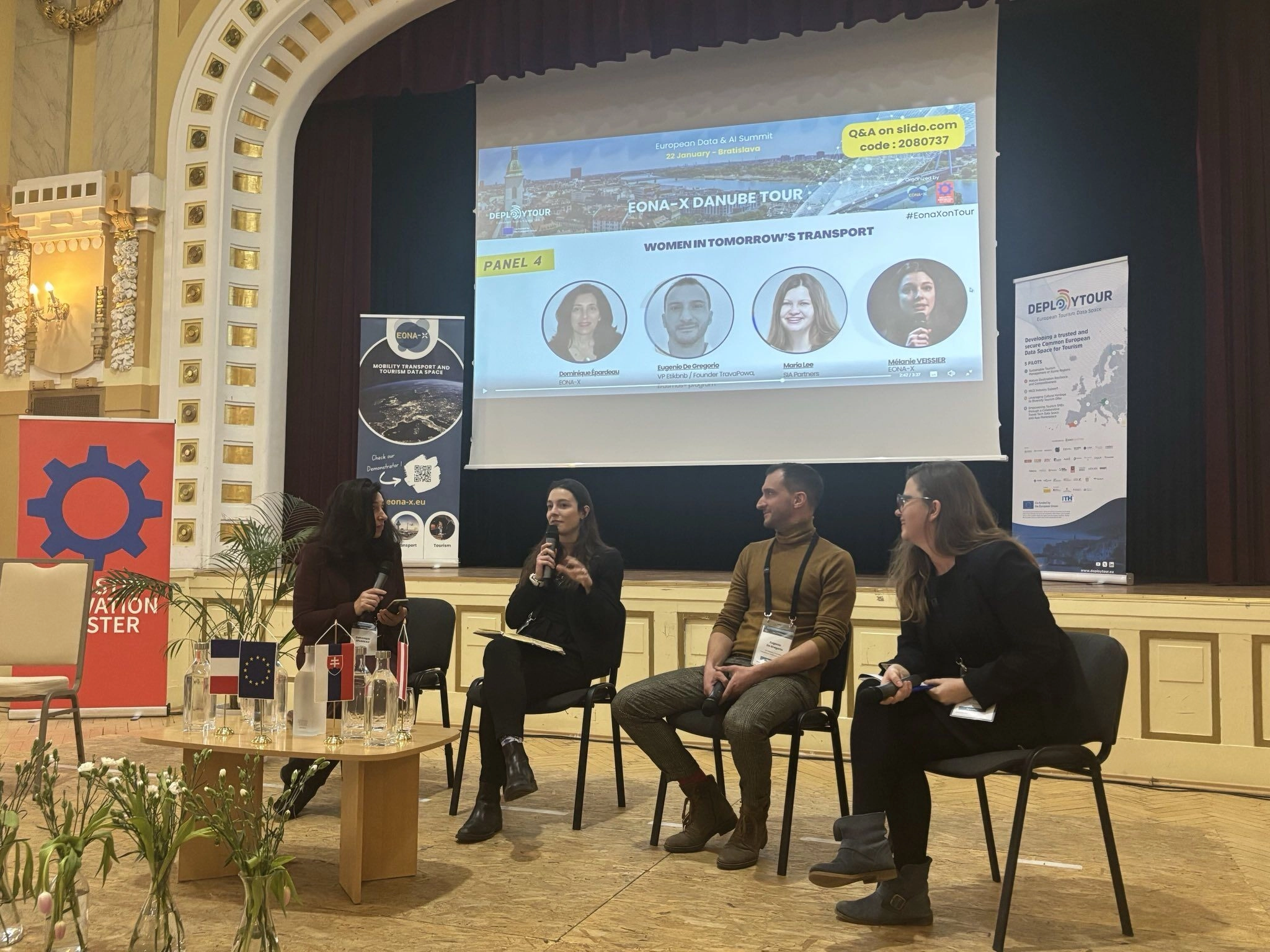
Women represent roughly 20–22% of the workforce in transport and logistics, with similar figures in AI-related professions. Leadership roles remain even more male-dominated. Yet the sector is being reshaped by digital transformation. Data-driven companies such as Amazon have revolutionized logistics by prioritizing algorithms, predictive analytics, and customer-centric platforms over traditional asset-heavy models.
Artificial intelligence can help identify inequalities—for example, through pay transparency analysis or workforce data audits. However, AI systems are only as neutral as the data and teams behind them. If development teams lack diversity, algorithmic bias can replicate existing inequalities at scale. Encouraging more women and girls to pursue STEM education and AI careers is therefore not only a matter of representation but of system quality. Inclusive innovation strengthens performance, improves decision-making, and ensures that emerging technologies support rather than undermine equality.
Tourism, Representation and Reclaiming Public Space
Mobility also includes the right to travel, explore, and participate in cultural life. Women influence a significant share of travel decisions, yet tourism narratives have historically centered on male figures and achievements. Feminist city tours across Europe are working to rebalance this perspective by highlighting women’s contributions to history and society.
In many major cities, only a small percentage of streets are named after women, reflecting deeper symbolic inequalities. Initiatives supported by programs such as Erasmus+ are developing educational tools and open-source resources to replicate inclusive tourism models. By combining research, storytelling, and digital innovation, these projects promote travel experiences that are both empowering and socially impactful. When women see themselves represented in public space and cultural narratives, mobility becomes an expression of belonging as well as freedom.
To move forward
The International Day of Women and Girls in Science reminds us that innovation is never neutral. Transport systems, AI technologies, and tourism infrastructures reflect the perspectives of those who design them. When women are fully included in scientific and technological fields, mobility becomes safer, more efficient, and more equitable. Turning celebration into structural change requires deliberate effort, long-term commitment, and shared responsibility across sectors.
To move forward:
-
Collect and publish gender-disaggregated data on safety, employment, and mobility patterns.
-
Promote women and girls into STEM education and leadership roles within transport and AI sectors.
-
Design mobility systems inclusively from the outset, integrating safety and accessibility by design.
-
Strengthen AI governance frameworks to proactively detect and prevent bias.
Empowering women and girls in science means giving them the authority and opportunity to shape the future of mobility—for everyone.